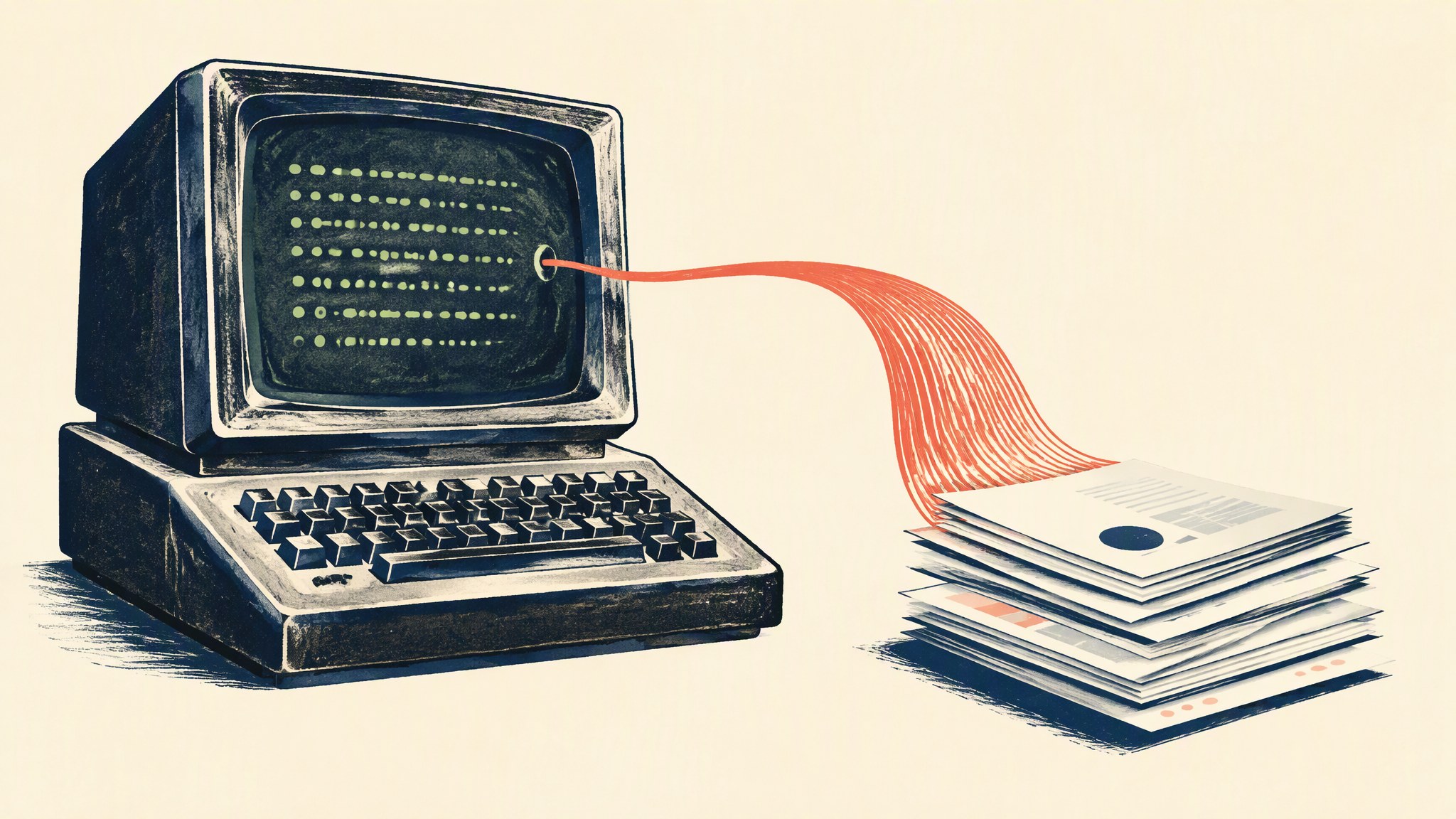
Somewhere in most large organisations sits a system that predates the integration era entirely. A mainframe routine, a terminal application, a bespoke store maintained by one person nearing retirement. It holds records nothing else holds. It has no API, no documentation anyone trusts, and no vendor to call. Every modernisation business case quietly routes around it, because nobody knows what touching it costs.
Meanwhile the organisation's AI ambitions stop at its door, because you cannot ground an answer in a system you cannot read.
Two ways that do not work
Replacement is the expensive answer to a question nobody asked. The system works. It has worked for decades. The risk of rewriting it dwarfs the value, which is why the rewrite has been "planned" since 2009.
Waiting is the free answer that is not free. Every cross-system question that touches those records goes back to a person, a green screen, and a printout. The most experienced people in the building spend their afternoons being a connector.
The third route
A patented method exposes the legacy program's output as a standard table — the program runs as it always has, and what it would have painted on a screen becomes rows and columns that the governed layer can read like any other source. Nothing inside the legacy system changes. Nothing is written back to it. The person nearing retirement gets asked fewer questions, and their knowledge of what the fields mean gets written into the catalogue where the next person can find it.
From that point the records join every other source: queryable, governed, with policy applied per user at query time and lineage attached to every answer they inform.
A bridge, said honestly
We describe this as a bridge, not an architecture. Screen-level integration is brittle by nature — a changed menu, an unexpected prompt, and the reading breaks until someone adjusts it. We would rather say that in a proposal than discover it in a review.
So the engagement includes the honest endgame: the bridge carries the load while the estate decides what the permanent answer is, and if the legacy system is eventually replaced, the governed layer reads its replacement the same way. The definitions, the catalogue and the policy survive the change, because they were never inside the green screen to begin with.